Frequently asked questions
Answers before you hire a painter
Everything homeowners in Oakland and the East Bay ask us most often — estimates, preparation, timing, warranty, and what the license and insurance actually protect.
1Getting started
First questions, answered
How do I get a quote?
Call or text (510) 927-7886, or use the free-estimate form. We set a time, come look at the space, talk through colors and sheen, and send you a written estimate. There is no charge and no obligation.
Is the estimate really free?
Yes. We come out, look at the actual condition of the surfaces, and put the scope and the price in writing. You are not committed to anything by asking.
Why will you not give me a price over the phone?
Because the price depends on the condition of your surfaces, and that cannot be seen over the phone. A number given sight-unseen either gets revised later or was padded to begin with. We would rather look and put it in writing.
What areas do you serve?
Oakland and the East Bay, including Berkeley, Alameda, Piedmont, Emeryville, San Leandro, Albany, El Cerrito, Richmond, San Pablo, Castro Valley, Hayward, Orinda, Lafayette, Moraga, Walnut Creek, Concord and Pleasant Hill. Not sure if we cover your street? Call (510) 927-7886 and ask.
What are your hours?
Monday through Saturday, 8:00 AM to 4:30 PM. We are closed Sundays.
Do you do small jobs, or only whole houses?
Both. A single room, a front door, a fence, or a whole-house interior and exterior. Tell us what you have in mind and we will quote it.
2Estimates and scope
How to read a quote and compare it fairly
What makes one quote higher than another?
Condition and access, far more than size. A house that needs extensive scraping, sanding, patching, caulking and priming is mostly labor. Height, steep lots and tight side yards add setup time. Two similar-looking houses can honestly quote very differently.
What should I compare between painters?
Ask everyone to quote the same surfaces, the same number of coats, and whether primer is included. Ask specifically what preparation is covered. Ask which product line will be used, what the warranty covers, and for the license number. Compare those before you compare the totals.
Is a much cheaper quote a better deal?
Usually it is a smaller scope or less preparation, not a better price. The preparation is what decides whether the job still looks right in a few years.
What happens if you find damage once you start?
We stop and show you. Soft trim, water-damaged wood and failed caulking usually only appear once scraping begins. You decide whether to address it, and any additional work goes in writing before we do it.
Do you put everything in writing?
Yes. Scope, surfaces, and price, before any work starts.
3Preparation and the work itself
What happens before and during
What preparation is included?
Washing, scraping back loose paint to a sound edge, sanding and feathering those edges, patching, caulking the joints that move, and spot-priming every bare area. Floors, furniture, walkways and landscaping are protected before anything starts.
How many coats do you apply?
Two finish coats in almost all cases. One coat covers; two coats are what give you even color and an even sheen. Primer is in addition to that where the surface needs it.
What paint do you use?
Benjamin Moore and Sherwin-Williams, chosen for the surface and the exposure rather than one default for every job. Low-VOC options are available when odor or air quality matters.
Do you clean up?
Every day, not just at the end. Floors and furniture stay protected while we work, and the site is cleaned at the end of each day.
Do I need to be home while you paint?
No. Many clients give us access and go about their day. We keep you updated and walk the finished work with you at the end.
Can I stay in the house during an interior job?
Almost always. We work room by room when that suits you, protect everything, and clean up daily.
How long does a project take?
Small interior jobs are often done in a day or two. Whole-home interiors and exteriors take longer, and cabinets take longer than walls because of cure time between coats. You get a timeline with your written estimate.
4Exterior painting
Weather, timing, and what lasts
What time of year can you paint outside?
The usual Bay Area exterior season runs late spring through early fall, but the real constraint is simpler: the surface has to be dry and stay above the product’s minimum temperature while the coating cures. We schedule around the weather rather than forcing it. Interior work continues year-round.
Does morning fog stop the work?
It can delay the start. A wall that looks dry after a foggy morning can still hold moisture, and coating over it traps that moisture under the film. That is what causes blistering a season later.
Do you pressure wash before painting?
Yes, on exterior jobs. Paint bonds to the surface, not to the dust, pollen and mildew sitting on it. The surface is then allowed to dry fully before anything is applied.
Why does one side of my house look worse than the others?
Exposure. South- and west-facing walls take the most sun and fade and chalk first. Shaded and north-facing walls stay damp and are where mildew shows up. We look at each elevation separately rather than averaging the whole house.
Can you paint just one side?
Yes, and sometimes it makes sense. The tradeoff is that a fresh coat will not match the weathered sides exactly. We will tell you honestly how noticeable that will be.
5Payment and scheduling
How it works once you say yes
What payment methods do you accept?
Cash, check, and Zelle.
Can I pay in installments?
Yes. Work is normally billed in three payments across the project rather than all at the end. The schedule is written into your contract before anything starts, and each payment matches work that has already been completed.
How far ahead do I need to book?
About a week, depending on the season and the size of the job. Tell us your timeline when we come out and we will be straight with you about what is realistic.
Do you help with choosing colors?
Yes. We will put up to three sample colors on your own wall at no charge, so you can see them in your light at different times of day. Additional samples beyond those three are charged for the paint.
How big is your crew?
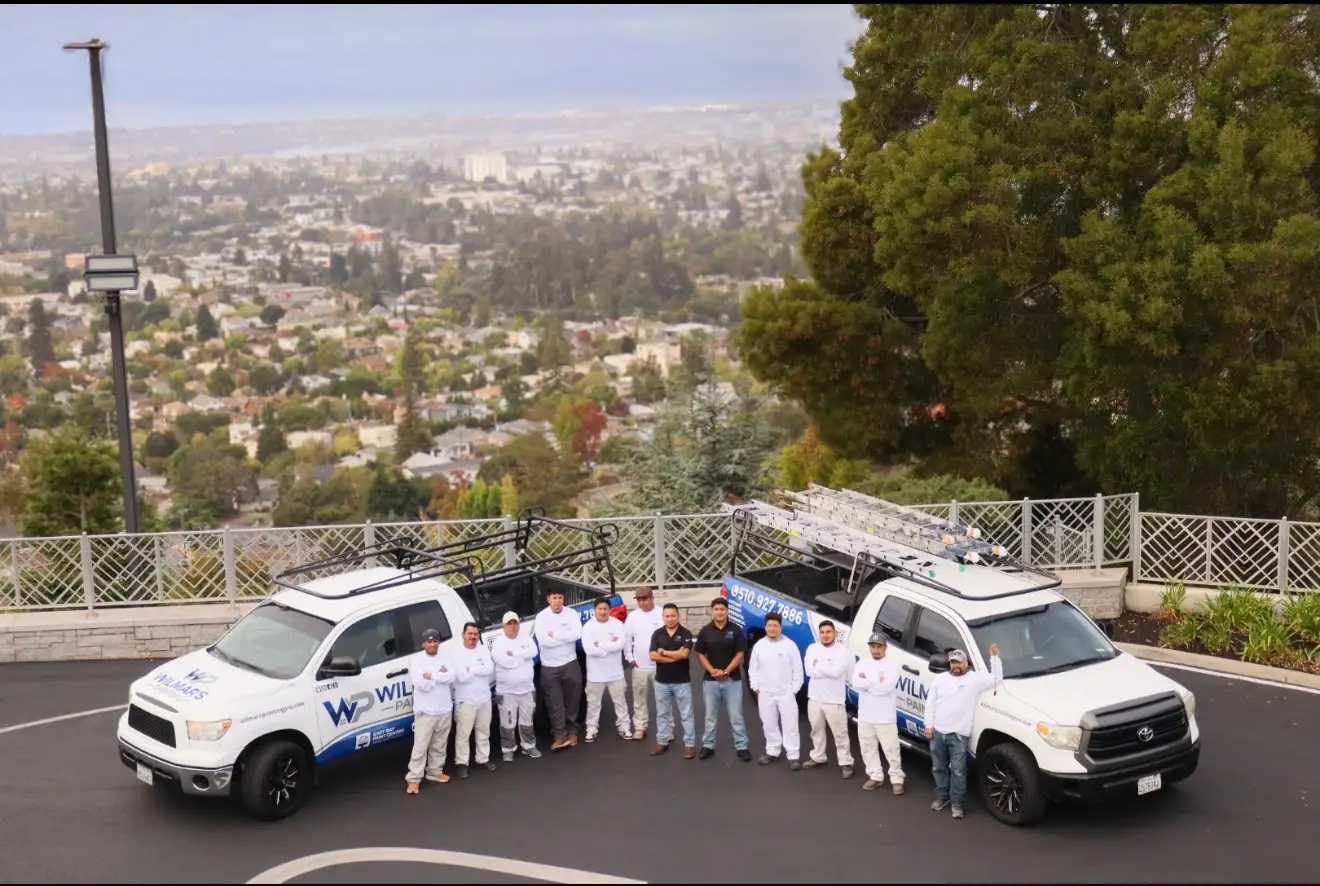
Around fifteen people work across our projects on a given day. How many are assigned to your home depends on the size of the job and the schedule we agree on.
6Cabinets
Refinishing kitchens and baths
Will cabinet paint chip or peel?
Not if the preparation is done. Kitchen cabinets carry cooking grease, so they are degreased first, then scuff-sanded, then coated with a bonding primer. Chipping almost always traces back to a skipped prep step rather than the paint.
Where do you paint the doors?
Doors and drawer fronts come off, get labeled, and are finished flat in a clean staging area. The boxes are coated in place. Finishing a door flat gives a smoother result and keeps paint out of the hinges.
Can I use my kitchen during the work?
Mostly yes. The boxes stay accessible while the doors are off and curing, though the kitchen will be masked. We will tell you what is usable on which days.
What will refinishing not fix?
It changes the color and the finish, not the layout, the box construction, or a door that is warped or delaminating. If a door is beyond saving we will say so rather than paint over the problem.
7License, insurance and warranty
The part that protects you
Are you licensed?
Yes. California contractor license #1160397. You can look it up yourself on the CSLB website rather than taking our word for it.
Are you bonded and insured?
Yes. Contractor bond #101093557 for $25,000, liability insurance, and workers’ compensation coverage. These are separate protections: the license means the state has checked the business, the bond gives you a formal way to make a claim if a job is not completed as agreed, the liability insurance covers accidental damage to your property, and workers’ compensation covers our crew if someone is injured on your job.
Do you carry workers’ compensation insurance?
Yes. This one matters more than most homeowners realize: if a contractor has no workers’ compensation and someone is injured on your property, the homeowner can end up responsible for the medical costs. Our coverage is on file and shows on our CSLB record along with the license and the bond.
What does the warranty cover?
A written three-year workmanship warranty covering application defects. We also walk the finished job with you and handle any touch-ups before we call it done.
Who will actually be at my house?
Our own crew. Owner Wilmar and co-owner Jeiser check in on every project personally, so the people responsible for the work are the people you meet.
Can I see reviews from real customers?
Yes. We hold a 5.0 rating across 33 verified Google reviews, and there are reviews on Yelp, Thumbtack and Nextdoor as well.
Still have a question?
Ask us directly. Free, written, no-pressure estimates across Oakland and the East Bay.